


Why determinism is the only metric that matters in national field synchronization.
The Industrial Fallacy of Heuristic Scheduling
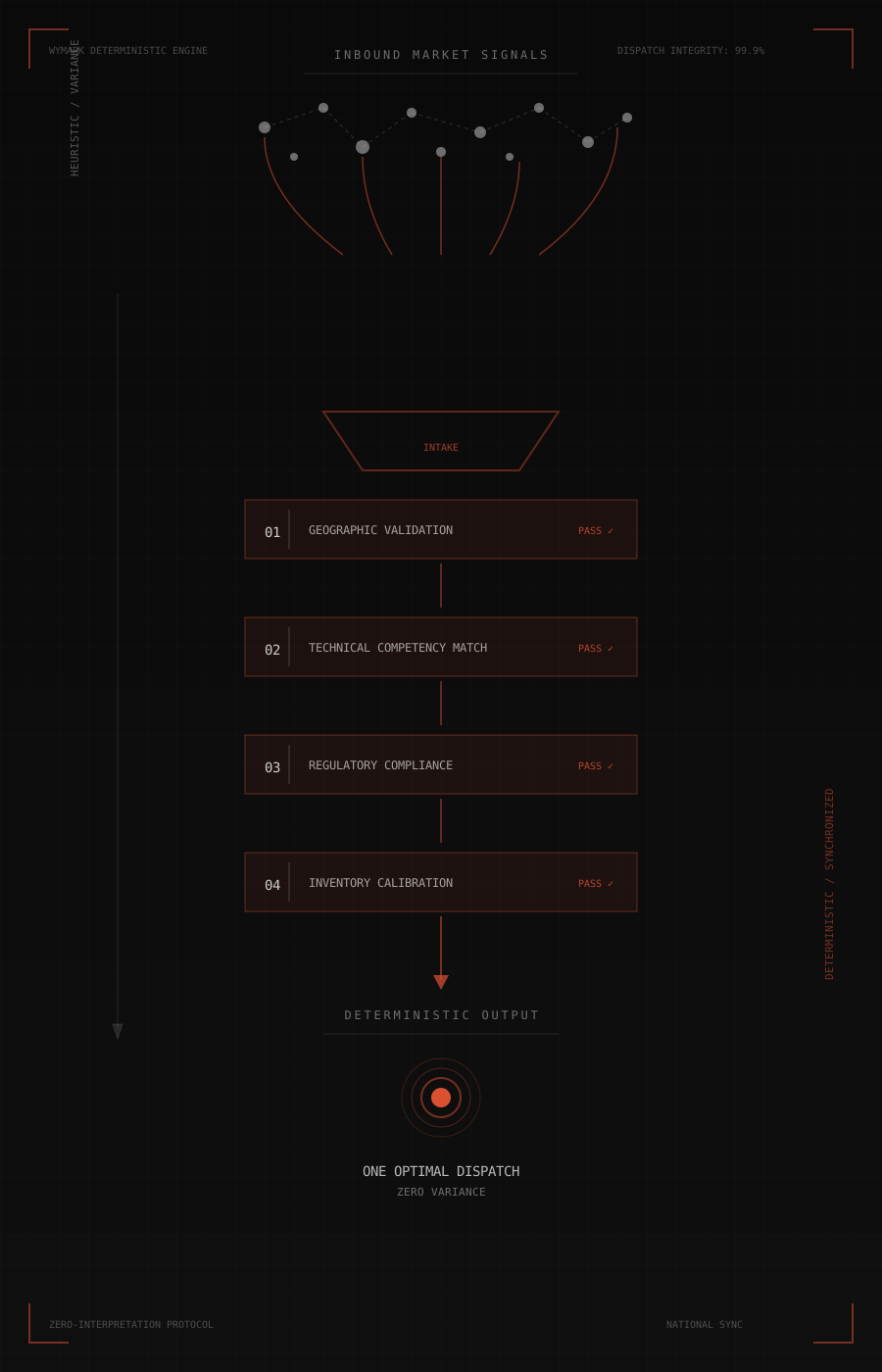
In the enterprise home service sector, most operations rely on what is technically defined as heuristic scheduling—a system built on "best guesses," manual human intervention, and flexible parameters. While this approach is functional for small, local fleets where a dispatcher can physically visualize the territory, it collapses under the weight of national demand surges. The fundamental flaw is the introduction of a human variable into the intake layer. When a system allows for interpretation, it allows for variance, and in a high-scale environment, variance is the primary driver of operational failure. Wymark’s research argues that for a system to achieve true scale and 99.9% dispatch integrity, it must be entirely deterministic. This means that for every inbound market signal, there is one, and only one, mathematically optimal dispatch outcome that the system is permitted to execute.
The Zero-Interpretation Protocol
The primary cause of chaos in field operations is the "administrative gap"—the period between a signal being captured and a technician being assigned. In a traditional model, a dispatcher looks at a map and "interprets" which technician should take the job based on feelings of proximity or seniority. Wymark’s infrastructure enforces a zero-interpretation protocol that strips the signal of all subjective context and reduces it to a set of binary operational requirements. By removing the human dispatcher’s ability to "think" about the schedule, we remove the latency that causes the market signal to decay.
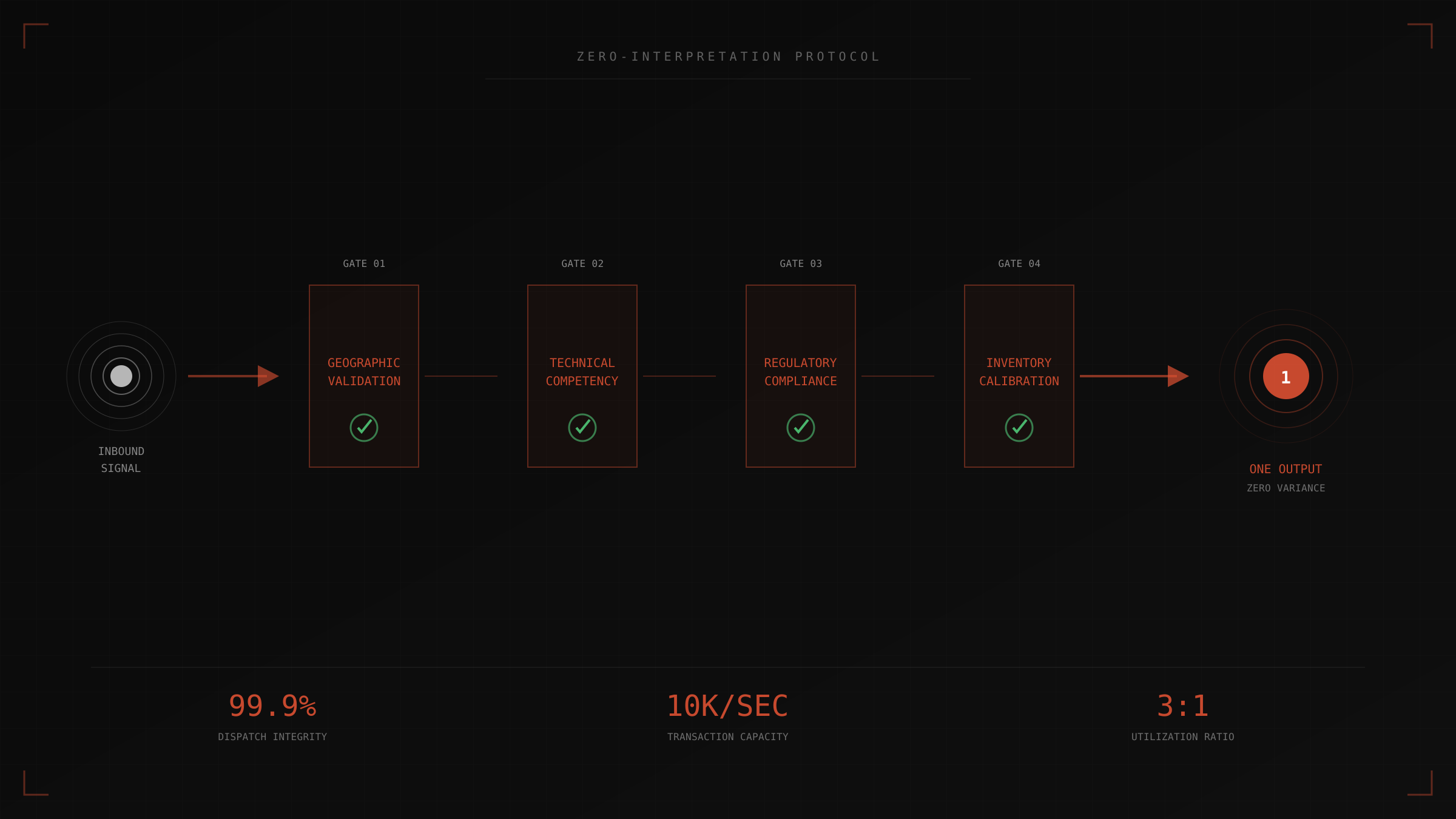
The deterministic engine processes the inbound packet through a series of rigid, non-negotiable gates:
- Geographic Coordinates: The system validates the precise latitudinal and longitudinal coordinates against territory boundaries to ensure zero drive-time leakage.
- Technical Competency Matching: The engine cross-references the specific equipment required for the job against the real-time certification and licensing level of the technician.
- Regulatory Compliance: It automatically verifies if the dispatch event meets state-specific life-safety or building code mandates for that specific zip code.
- Inventory Calibration: The system checks the technician’s digital truck-stock to ensure the physical assets required for the job are present before the dispatch is confirmed.
The Mathematical Optimization of Route Density
Once a signal is normalized and validated, the Wymark Load Balancer calculates its systemic impact. Unlike standard software that simply looks for the first available time slot, a deterministic engine looks for the slot that maintains the highest possible route density for the entire fleet. This is the difference between "getting a job on the board" and "optimizing a machine". The engine asks a series of mathematical questions: does this appointment increase or decrease the overall density for the week? What is the fuel-burn penalty for this specific route deviation? Will this appointment trigger a cascade failure in the technician's existing schedule that results in overtime or burnout?
Labor Retention Through Operational Stability
One of the most overlooked aspects of deterministic scheduling is its impact on the workforce. Wymark’s data shows that the primary driver of field technician turnover is not salary, but operational turbulence. When technicians are forced to navigate erratic schedules, long drive times, and mis-scoped jobs, they suffer from systemic fatigue. A deterministic system stabilizes the technician’s environment by providing predictable routes that cluster demand around "anchor" installations. This reduces the psychological and physical toll of long-distance driving and ensures that when a technician arrives on-site, they have the correct tools and information to complete the job on the first attempt. By treating the fleet as a high-precision instrument rather than a pool of on-call labor, we effectively double the "wrench-time" per technician without increasing their hours worked.
Systemic Resilience and Peak-Load Performance
A deterministic system is built to handle volatility. During seasonal surges or emergency weather events, manual dispatch offices frequently enter a state of "systemic exhaustion" where the volume of inbound signals exceeds the human capacity to process them. Because Wymark’s infrastructure is algorithmic and governed by rigid API rules, it can scale to process 10,000 transactions per second without a single second of latency. This resilience ensures that the enterprise partner can capture 100% of market demand during peak windows while their competitors are still struggling with administrative bottlenecks.
The Algorithmic Future of the Enterprise Fleet
The transition from heuristic to deterministic logic is not merely a software upgrade; it is a shift in the fundamental philosophy of service delivery. For national providers to maintain a competitive margin and a 3:1 utilization ratio, they must move away from the "office" model and toward an "infrastructure" model. Wymark Digital provides the plumbing required to bridge the gap between market demand and field execution, ensuring that the acquisition layer and the operational layer function as a single, unified, and perfectly synchronized machine. By making determinism the primary metric, we eliminate the variance that kills profit and build a system that is as reliable as the power grid.
