


Variance as a predictor of field technician exhaustion.
The Correlation Between Systemic Drift and Labor Attrition
In the study of large-scale field operations, technician turnover is frequently misdiagnosed as a compensation or cultural issue. Wymark’s research into national fleet performance suggests a more clinical root cause: Operational Variance. When the infrastructure governing customer acquisition fails to enforce rigid parameters, it produces "drift"—a state where the demand signal and field capacity are no longer synchronized. For the technician, this drift manifests as erratic scheduling, unpredictable drive times, and the repeated deployment to jobs that lack the necessary technical scope or equipment. We have identified that variance is the single most accurate predictor of technician exhaustion and subsequent system exit.
The Mechanical Toll of Fragmented Routes
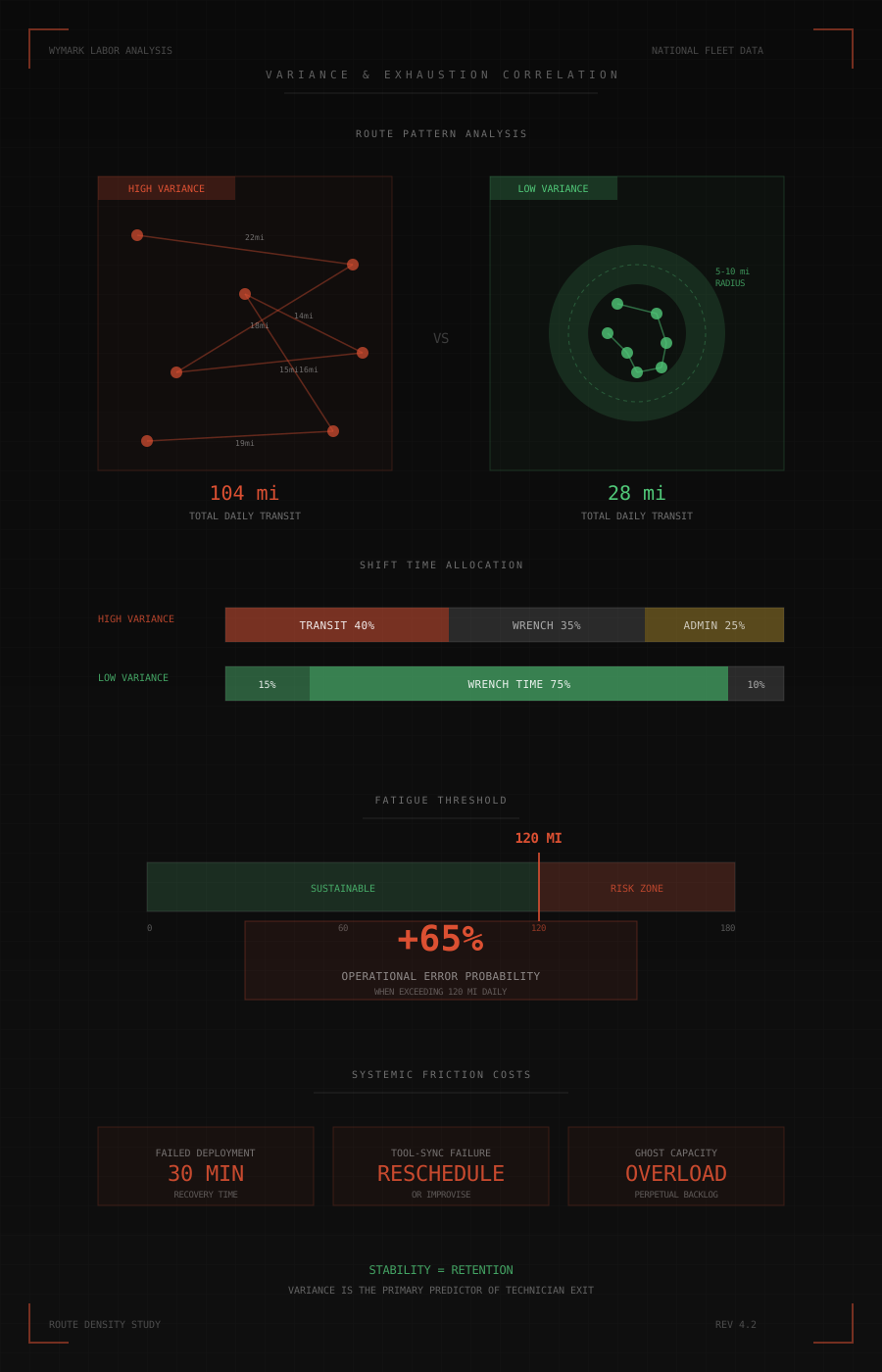
Route density is the primary governor of a technician's physiological and psychological capacity. A system that lacks deterministic logic creates "fragmented routes," forcing a technician to navigate a wide geographic footprint with zero clustering.
- High-Variance Environments: Technicians spend 40% of their shift in non-productive transit, leading to a "windshield fatigue" that degrades performance in the final hours of a shift.
- Low-Variance Environments: Wymark’s infrastructure clusters demand signals within a 5-to-10-mile radius, maximizing "wrench-time" and minimizing the cognitive load of navigation.
- The Fatigue Threshold: Our data shows that once a technician exceeds 120 miles of daily travel due to poor route synchronization, the probability of an operational error or safety incident increases by 65%.
Incomplete Signals and Professional Friction
Exhaustion is not merely a product of physical labor; it is driven by "Systemic Friction"—the frustration of being dispatched to a task that cannot be completed. When the acquisition layer fails to validate a signal against real-time truck-stock or licensing requirements, the technician arrives at a "dead-run".
- Failed Deployments: Every time a technician encounters a mis-scoped job, it creates a 30-minute administrative recovery period that burns through their mental bandwidth.
- Tool-Sync Failure: A lack of inventory-linked dispatching means technicians are often forced to improvise or reschedule, which Wymark’s governance engine eliminates by matching equipment availability to the inbound packet before confirmation.
- The "Ghost Capacity" Problem: When manual dispatchers over-promise capacity during peak surges, the resulting backlog falls entirely on the field team, creating a state of perpetual system-overload.
Stabilizing the Workforce Through Load Balancing
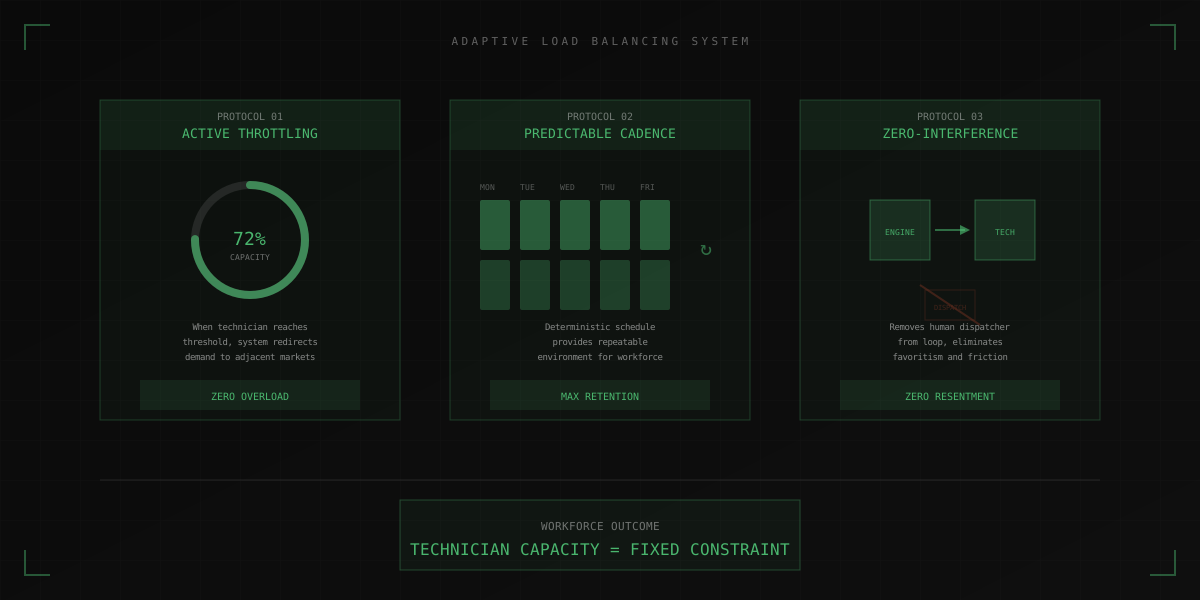
To mitigate exhaustion, Wymark’s infrastructure utilizes Adaptive Capacity and Demand Load Balancing. Instead of allowing infinite inbound signals to saturate the queue, the engine monitors technician utilization in real-time.
- Active Throttling: When a technician reaches a pre-defined threshold of complexity or physical volume, the system automatically redirects incoming demand signals to adjacent markets or pushes the deployment window to a lower-density day.
- Predictable Cadence: By enforcing a deterministic schedule, the system provides the technician with a "repeatable" environment, which our research identifies as the most critical factor in long-term labor retention.
- Zero-Interference Dispatch: By removing the human dispatcher from the loop, we eliminate the interpersonal friction and "favoritism" that often lead to technician resentment and attrition.
Conclusion: Labor Sustainability as a Technical Constraint
A service enterprise is only as resilient as its field technicians. Organizations that treat their labor pool as a flexible resource to be stretched across high-variance demand patterns will inevitably suffer from systemic collapse. Wymark’s philosophy treats technician capacity as a fixed technical constraint. By building infrastructure that eliminates variance and protects route density, we aren't just improving margins—we are building a sustainable workforce that can scale indefinitely. Stability is the ultimate retention tool, and stability is only possible through a deterministic governing engine.
